
Digital brand protection should cover six channels: marketplaces, independent online stores, social media, digital ads, domain names and app stores. Misuse of a brand looks different in each, and each has its own reporting route. Yet the same seller or group often uses several channels at once; a team that watches each channel separately sees the same case several times, and incompletely every time.
Marketplaces
Counterfeit listings, unauthorized sellers and the brand's images used on other products show up here most often. Besides global platforms, the local marketplaces of every country the brand sells in belong on the list. The Turkish complaint process is covered in how to file a counterfeit complaint on a marketplace, and unauthorized sale of genuine product in unauthorized marketplace sellers.
Independent online stores
Stores running on their own domains, especially those set up on a dropshipping model, open and close quickly. Evidence therefore has to be captured at the moment of detection: a few days later the site may be back at another address under another name. Reports can go to the site's hosting provider or payment intermediary.
Social media
This channel holds accounts that copy the brand's name, logo and posts, counterfeit sales run through in-platform shopping features or direct messages, and pages that collect user data with promises of campaigns or giveaways. Reporting and legal routes are covered in fake brand accounts on social media.
Digital ads
Search ads that buy the brand name as a keyword and send users to another page, and social media ads that use the brand's images, fall under this heading. An ad is rarely a case on its own; it carries traffic to a copy site or a fake account. An ad finding is therefore recorded together with the address it leads to.
Domain names
Misspelt names, names that add words such as "outlet", "sale" or "support" to the brand name, and extensions the brand does not use. These addresses serve as copy stores and as phishing pages. Cancellation and transfer routes are covered in cybersquatting.
App stores
Apps that use the brand's name or icon may ask users for login details or payment. If the brand has its own mobile app, users find it harder to tell the fake one apart. Apple's App Store and Google Play have their own routes for reporting intellectual property infringement.
How do the channels connect?
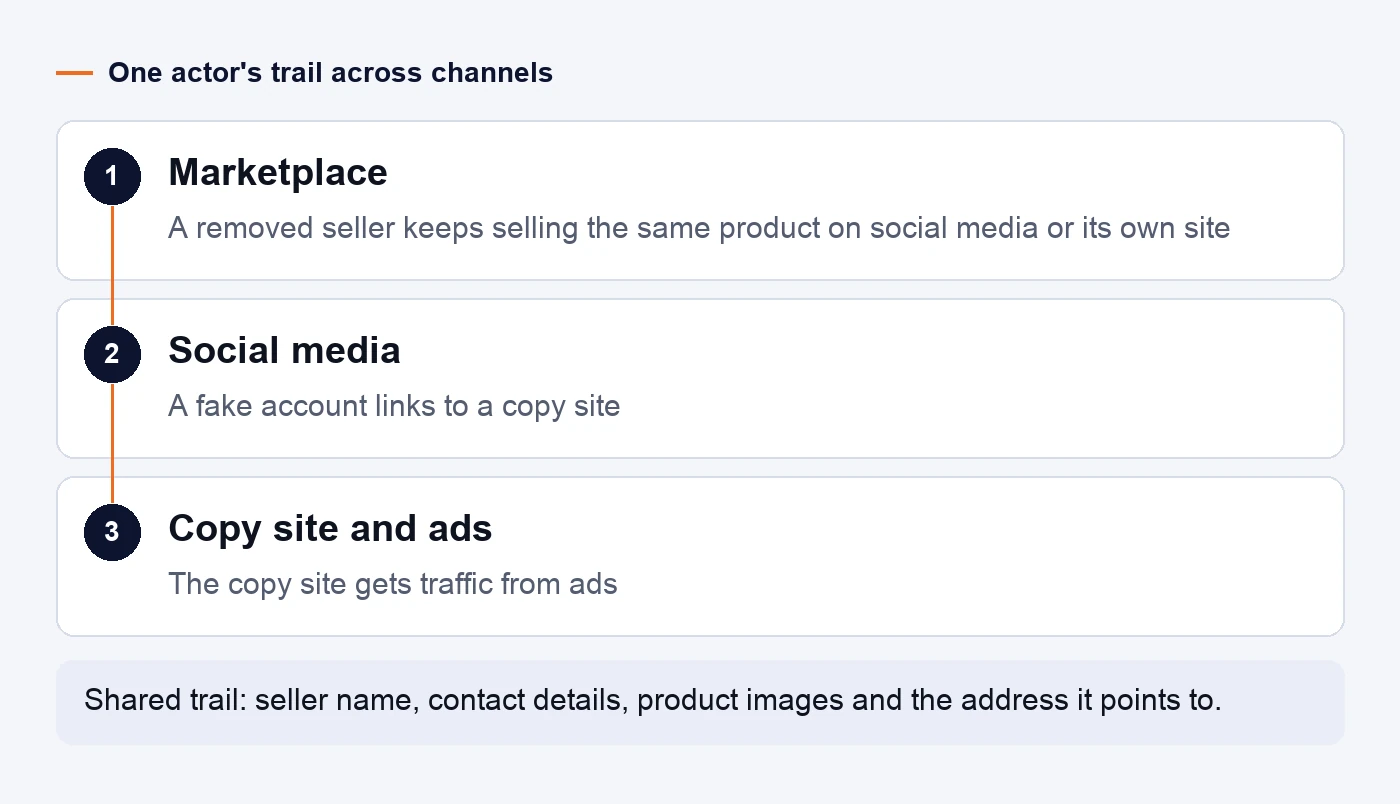
A seller removed from a marketplace can keep selling the same product on social media or its own site. A fake account links to a copy site, and the copy site gets traffic from ads. So when a finding is recorded, the seller name, contact details, product images and the address it points to are kept as well. The same actor's trail in another channel is usually found through these shared elements.
Which channel should be monitored first?
The order depends on the sector and on the brand's own channels. If the brand has a membership system, a mobile app or a site that takes payments online, domains and app stores move close to the top because of phishing risk. Past cases, customer complaints and the countries the brand sells in settle the list.
Authex monitors all six channels on one platform. Whatever channel a finding comes from, it appears in the same list, with the same evidence layout, ranked by risk level. The scope is on the solutions page.