A listing or account that uses your brand name becomes a finding once it is clear that the user has no permission from the brand. So the first thing checked for every detection is the user's authorization status: authorized, unauthorized or not yet clear. Which finding is handled first, which action fits and where the team spends its time all follow from that class.
Which classes does authorization status fall into?
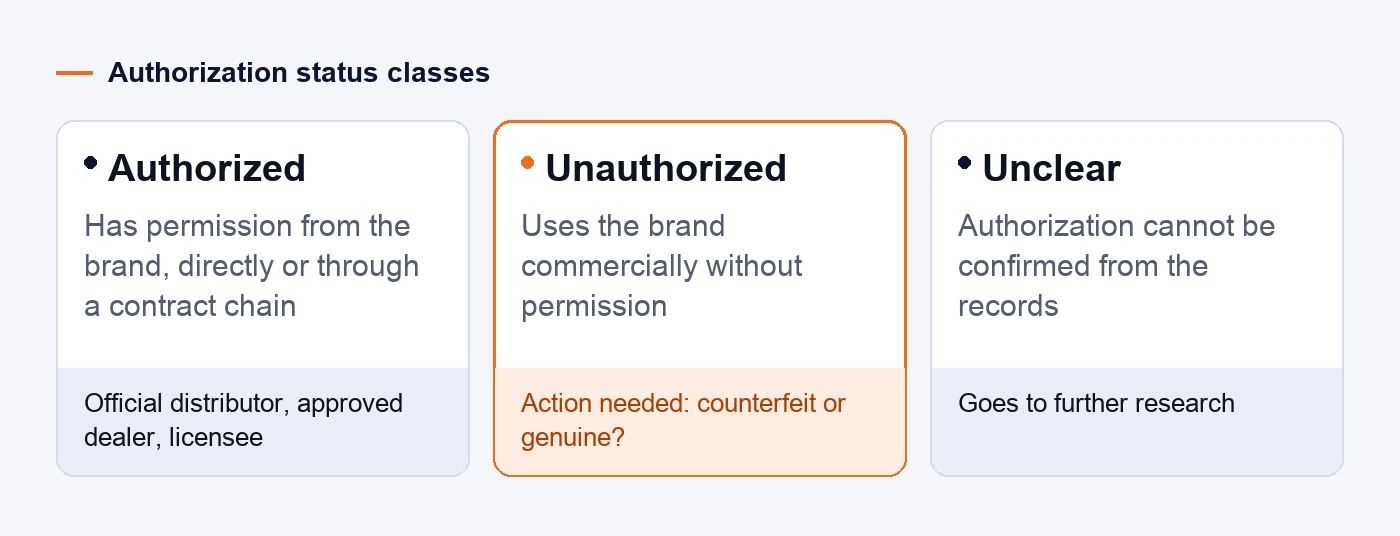
- Authorized: the user has permission from the brand, directly or through a contractual chain. Official distributors, approved dealers and licensees belong here.
- Unauthorized: the user is using the brand commercially without permission. The finding calls for action; which action fits depends on whether the product sold is counterfeit or genuine.
- Unclear: authorization cannot be confirmed from the records at hand. The finding goes to further research.
What does a wrong classification cost?
Reporting an authorized dealer's listing causes two problems. The dealer sees its own brand targeting it, and the relationship suffers. On the platform side nothing changes either: the dealer objects with its invoice and, under Article 9 of Law No. 6563, the listing is published again. The complaint and objection process is covered in how to file a counterfeit complaint on a marketplace.
The opposite error is treating an unauthorized use as authorized and moving on. A dealer whose contract has ended keeps selling for as long as it stays on the list, and no finding is ever opened.
Which records determine authorization status?
- Authorized seller and distributor list: with each seller's company name and its store names on marketplaces. Without store names, the comparison cannot be made at listing level.
- Official channels: the brand's own domains, marketplace stores and social media accounts. This record is the reference for telling imitation accounts and copy sites apart.
- Contract dates: a seller having been authorized in the past does not show it is authorized today. If the end date is not on the list, the list goes stale without anyone noticing.
Which cases stay unclear?
The most common example in multi-tier distribution is a dealer that buys from an authorized wholesaler but has no permission to sell on marketplaces. The product is genuine and the seller is inside the chain; it simply lacks permission for this channel. Another is a second store opened by an authorized dealer under a different company name. These cases are usually settled by asking the wholesaler or the dealer directly. The answer goes on the list so the same question is not asked twice.
In what order are findings handled?
Once the class is set, the order follows sales impact:
- Unauthorized, high sales volume: the first group handled.
- Unauthorized, low sales volume: kept under monitoring; moved to action if it repeats or grows.
- Unclear: sent to research, with the result written to the list.
- Authorized: recorded, no action needed.
A health or safety risk changes this order. In food supplements or cosmetics, even a low-volume unauthorized sale may be moved up, because a product stored in unknown conditions is reaching customers.
In Authex you add your authorized sellers, official domains, verified social media accounts, app developer accounts and approved advertisers to the system. Each source's authorization status is set from that record as authorized, unauthorized or unknown; listings that use your brand from an unauthorized source become findings and are ranked by risk level.