Unknown advertiser
Advertisers using your brand name who are not on your approved list are found. Your own ad accounts are kept out of scope.

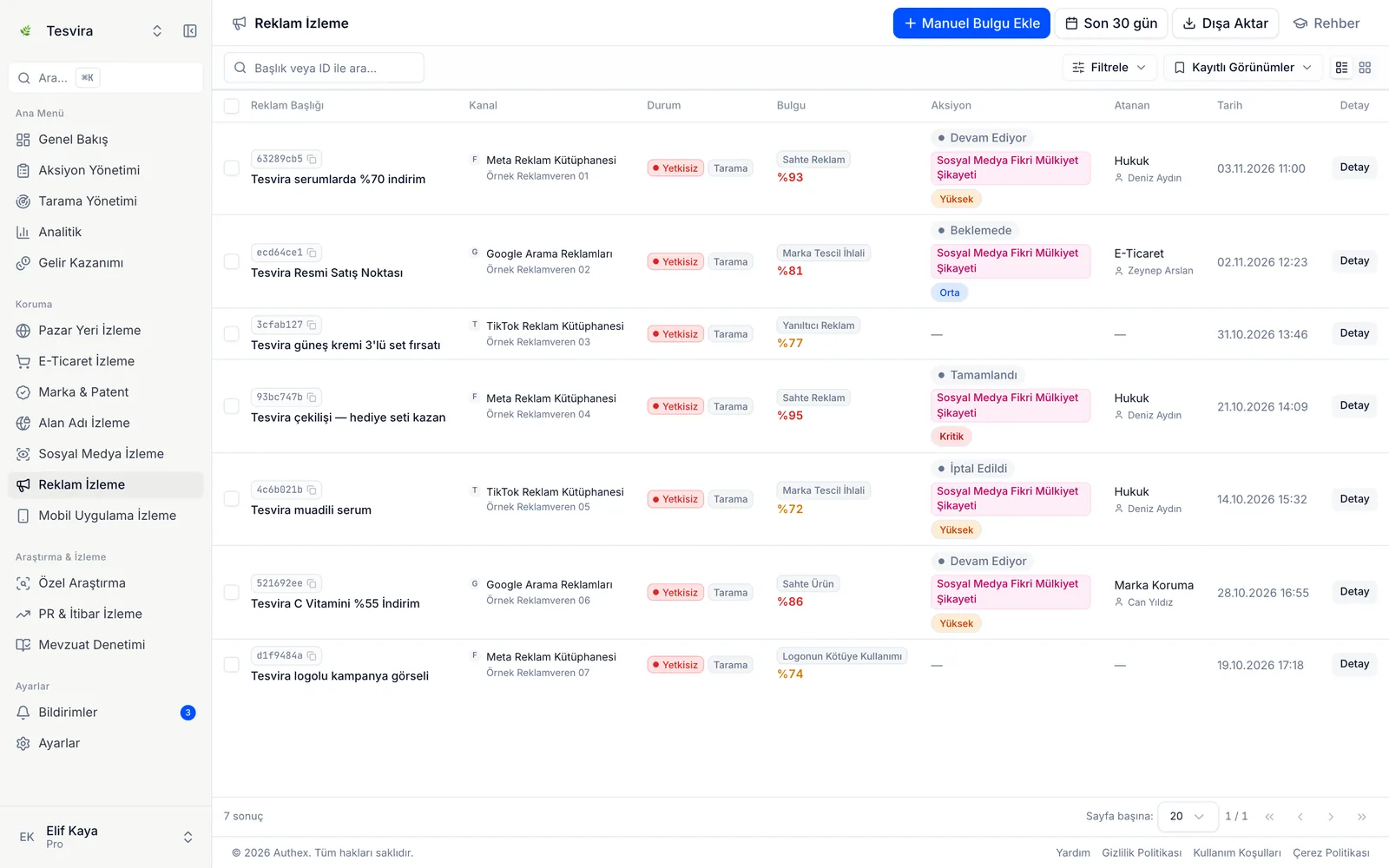
Authex ad monitoring is an online brand-monitoring solution that detects ads using your brand name without permission in the Meta, TikTok and LinkedIn ad libraries and in Google search ads, collects the evidence and reports it. For each finding it prepares the evidence file and a draft of the platform complaint; the brand's team or its lawyer decides whether to file it and files it.
Overview
Ad monitoring tracks who uses your brand name in advertising. Fake discount and counterfeit ads collect clicks with the brand's name and send people to pages that are not the brand's, and an advertiser bidding on your brand name in search ads can end up above your official site.
Authex scans four sources: the Meta Ad Library, the TikTok and LinkedIn ad libraries, and sponsored Google results for your brand name. A finding is created when an advertiser using the brand name is not on your approved list, and claims such as “original” or “official” in the ad copy are flagged as well.
Each ad is recorded with its copy, creative, landing page and the dates Authex first and last saw it; for text ads without a creative, a screenshot of the landing page is added. Your own advertiser accounts are allow-listed and never produce findings.
Scope
The Meta, TikTok and LinkedIn ad libraries are scanned, and sponsored Google search results for your brand name are checked.




Detection
Advertisers using your brand name who are not on your approved list are found. Your own ad accounts are kept out of scope.
Ads claiming to be "original" or "official" are flagged as well.
Advertisers appearing as sponsored results in Google searches for your brand name who are not on your approved list are flagged.
Evidence
Process
The brand name, products, official images, your own advertiser accounts and approved domains are entered.
You choose the ad libraries, countries and scan frequency.
The advertiser is compared with your approved list; misleading claims in the ad copy are flagged separately.
Findings are ranked by risk level; the brand's team confirms, reviews or dismisses each one.
For a confirmed ad, Authex prepares the evidence file and a draft notice. The brand's team or lawyer files the complaint, and Authex keeps tracking the ad's status.
Who it is for
Manufacturers whose name is used in fake discount ads during sales seasons see those ads and the pages they lead to.
Exporters promoting their products in several countries target scans by country.
Brands that drive traffic to their own site with search ads notice unknown advertisers bidding on their brand name.
Lawyers preparing an ad complaint work from an evidence file with the advertiser, copy, creative and landing page.
FAQ
Authex detects the ad, records it and its landing page with evidence and prepares a complaint draft. The brand's team or its lawyer decides whether to file it and files it; the platform decides on removal. Authex keeps tracking the ad's status.
Four sources: the Meta Ad Library, the TikTok ad library, the LinkedIn ad library and sponsored Google search results for your brand name.
No. The brand's own advertiser accounts are allow-listed and do not produce findings.
Yes. The evidence file holds the advertiser name, ad copy and creative, landing page URL and the dates Authex saw the ad. Your lawyer can use the file for the platform report and for their legal assessment.
Guides

A pre-season checklist, the order for capturing evidence and reporting to ad platforms, registrars and hosts, and where UDRP and .tr disputes fall short.
5 min read
Marketplaces, online stores, social media, ads, domains and app stores: how misuse of a brand looks in each channel and how the channels connect.
4 min read
Evidence of online brand infringement means listing captures, timestamps, seller details, test purchases and, if needed, a notarial record. Here is the order.
6 min readGoogle Ads restricts trademarks in ad text, not as keywords. How to record a competitor's ad, report it to Google and where Turkish trademark law comes in.
6 min readIndustries
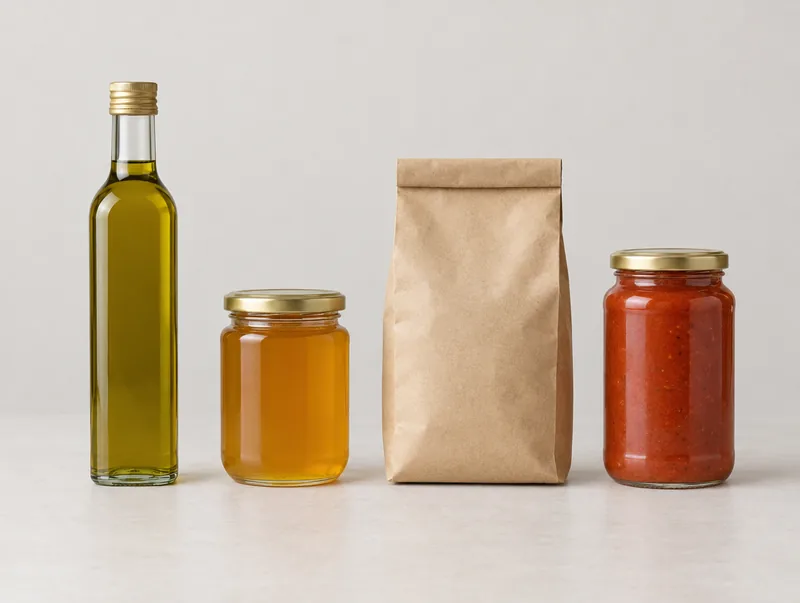 Food and beverageMonitor fake campaign pages, counterfeit listings and online sales missing mandatory food information.
 Food supplementsTrack counterfeit supplement listings, non-permitted health claims and unauthorized online sellers.
 ElectronicsMonitor counterfeit charger and battery listings, fake repair service sites and copycat apps.
Other solutions
Regularly monitors your brand's visibility on marketplaces; detects and reports counterfeits, unauthorized sellers and unauthorized brand use with evidence.



Monitors your brand's presence on independent e-commerce sites; detects unauthorized sales, counterfeits and unauthorized dealer activity with evidence.
Regularly searches the records of 9 trademark and 10 patent offices, including TÜRKPATENT, EUIPO, WIPO and USPTO, for filings similar to your brand and products, and lists them with their source. The infringement assessment belongs to your trademark and patent attorney.
Meeting request
The first meeting reviews your brand, sales channels and the risks you face, and recommends a monitoring scope.
Request a meeting