Replica and "AAA quality" listings
The seller may put the brand name in the title and the logo in the photo and price far below the original. These listings can appear on the same search page as the genuine product.

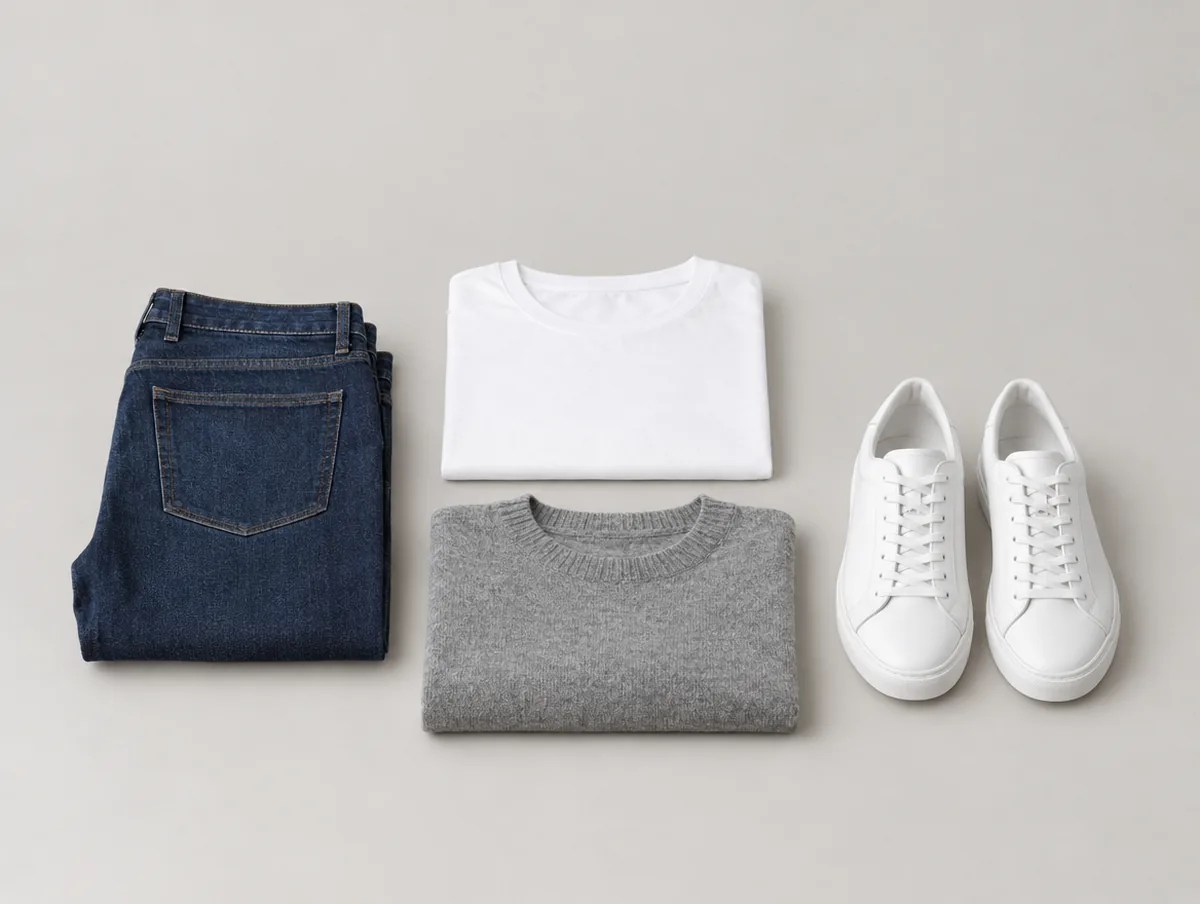
Counterfeit clothing can be sold in listings titled "replica", "AAA quality" or "outlet", with the brand's own campaign photos. Authex detects and documents these listings, and keeps monitoring their status after your brand files a notice.
Implementation
Authex scans marketplace listings, social media stores, ads and domains that use your brand name, logo and collection images. Listings with words like "replica", "AAA quality" or "dupe" and sellers using your brand in their store name are flagged separately. Listings with words like "replica", "AAA quality" or "dupe" and sellers using your brand in their store name are flagged separately. Listings that reuse your campaign photos are found by image similarity and reverse image search, even when the brand name is missing. Once your brand files a notice, the listing's status is monitored, and when the season changes the same seller's return with the new collection is watched.
Clothing, footwear and accessories is the sector with the highest online spending in Türkiye. That volume can also give counterfeit sellers a wide shop window. Search for a brand and the original can be listed side by side with other listings using the same photo. Most seized counterfeit footwear shipments travel by post in single-item parcels, and the OECD and EUIPO note that small parcels like these are hard for customs to screen. Reporting the listing to the platform can therefore be a key step for the brand owner.
Request a meeting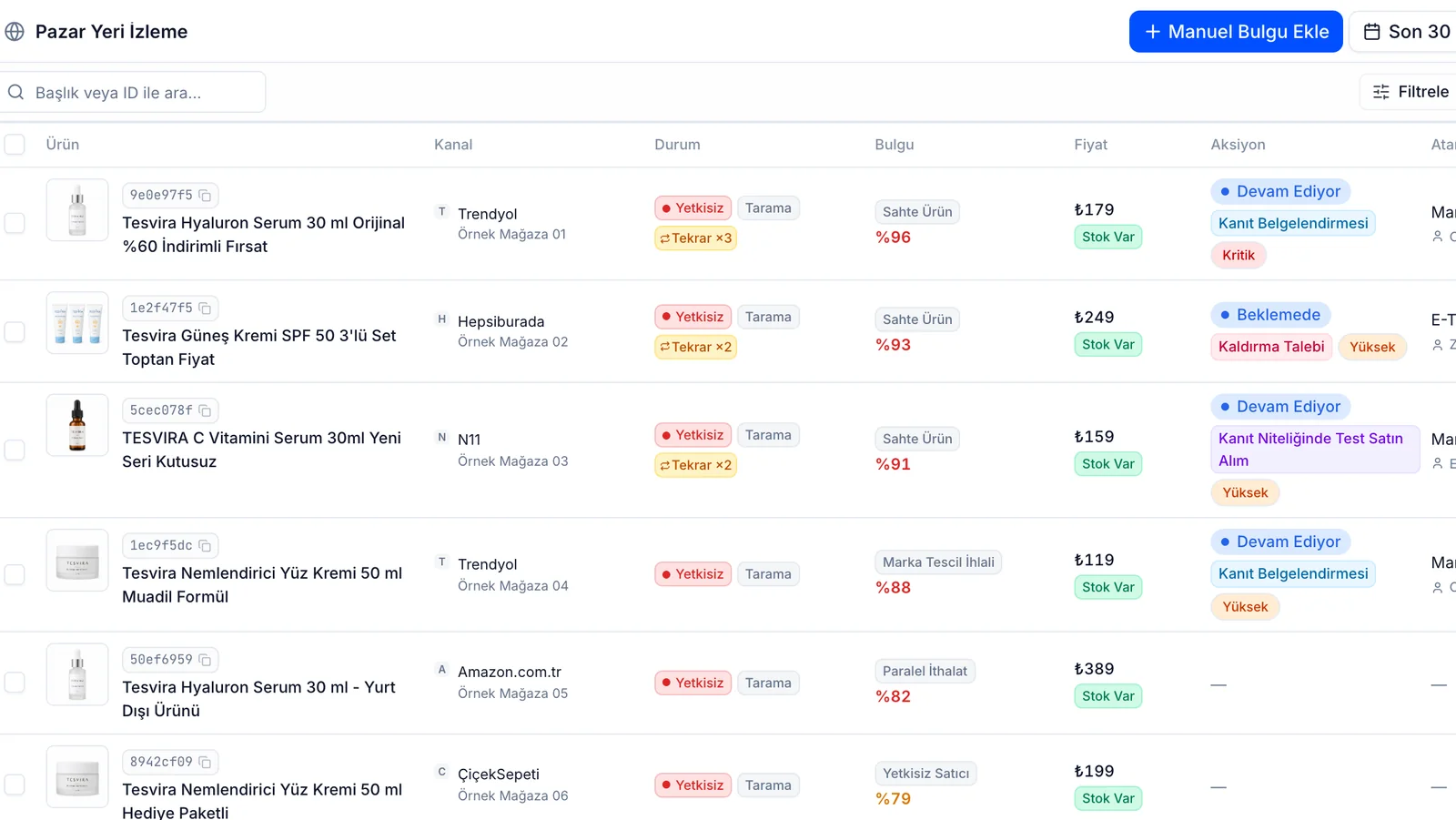
Data
Online spending on clothing, footwear and accessories in Türkiye in 2025, the largest of any sector
Source: Turkish Ministry of Trade, e-commerce volume reached TRY 4.6 trillion in 2025, 12 May 2026Share of counterfeit footwear seized worldwide in 2020-21 that was shipped by post; 90% of these seizures held fewer than ten items
Source: OECD and EUIPO, Mapping Global Trade in Fakes 2025Risks
The seller may put the brand name in the title and the logo in the photo and price far below the original. These listings can appear on the same search page as the genuine product.
A store or social account may add the brand name with "outlet" or "store" after it. Buyers may assume they are dealing with an authorized seller.
Catalog and model photos the brand paid for can be used in counterfeit listings. When the item that arrives does not match the photo, returns and reviews can point at the brand.
During end-of-season sales, sites on domains resembling the brand name can pull traffic through social ads and take payments.
Example scenario
Logos, collection photos, product codes, official stores and authorized sellers are entered.
Marketplaces are searched with the brand name and terms like "replica", and your catalog photos are compared with listing images.
Listings from the same seller are grouped in one file, each with its URL, screenshot and date ready.
Removed listings and sellers stay on the watch list. If the same seller or images reappear with new-season items, the finding reopens.
Regulation
On the right holder's complaint backed by information and documents on the intellectual property infringement, the marketplace removes the product and informs the seller and the right holder. The complaint includes the parties' identity and address details, information on the product and the grounds for removal. The regulation's articles setting the detailed procedure and the 48-hour period (Articles 12 to 14) were stayed by the 10th Chamber of the Council of State (Danıştay) in May 2023; confirm the current position with your lawyer.
Anyone who infringes another's trademark by producing, offering for sale or selling goods faces one to three years in prison and a judicial fine of up to 20,000 days. For a seller who keeps listing, dated online records can be used as evidence when a criminal complaint is filed.
Platforms must offer an easy-to-use mechanism for reporting illegal content, and businesses can use it to flag content that infringes their intellectual property. Online marketplaces must verify and display seller contact details. All regulated services have had to comply since 17 February 2024.
This section is for information only; official sources prevail for current obligations.
FAQ
Under the Turkish Industrial Property Law, trademark protection is obtained through registration, and Law No. 6563 requires a marketplace complaint to be backed by information and documents on the intellectual property infringement. Assess with your lawyer which routes are open for an unregistered sign. While registration is pending, listings can still be recorded so the file is ready once it is granted.
Authex captures the account name, posts and prices, and the right holder submits them through the platform's intellectual property form. On platforms serving users in the EU, these reports fall under the Digital Services Act notice mechanism. Authex monitors the account's status after the report and watches whether it returns under a new name.
Even if the product is genuine, unauthorized use of the photo is a separate matter that can be assessed under copyright or trademark law. On a Turkish marketplace, a seller who objects must submit information and documents showing the opposite of the complaint. Authex records the listing and photo match, and your legal team decides the route.
Under Law No. 6563, the marketplace removes the product on a complaint backed by information and documents and informs both the seller and the right holder; if the seller submits an objection backed by information and documents showing the opposite, the product is relisted. The law sets no fixed number of hours. Articles 12 to 14 of the regulation set the complaint and objection procedure and provided for a 48-hour removal period and a 24-hour relisting period; the execution of these articles was stayed by the 10th Chamber of the Council of State (Danıştay) in May 2023, and as of November 2026 we have found no published information that the stay has been lifted. Platforms may continue to apply these periods in their own procedures; confirm the current position with your lawyer.
Other industries
 Luxury goodsDocument counterfeits on resale platforms, fake boutique sites and accounts trading on your brand name.
 Cosmetics and personal careTrack dupe and counterfeit listings, fake giveaway accounts and misleading product claims online.
 JewelleryMonitor listings copying your designs, boutique accounts using your brand and unauthorized use of your collection photos.
Meeting request
The first meeting reviews your brand, sales channels and the risks you face, and recommends a monitoring scope.
Request a meeting