"Dupe" and "tester" listings
Sellers may put your product name in the title, show your photo and write "dupe" or "tester" in the description. Marketplace search can then show the listing next to the original.

Counterfeit cosmetics can go on sale with the brand's own photos and labels such as "dupe", "tester" or "outlet". Authex finds these listings and the accounts opened in the brand's name, documents them and prepares the file for the notice your brand or lawyer files.
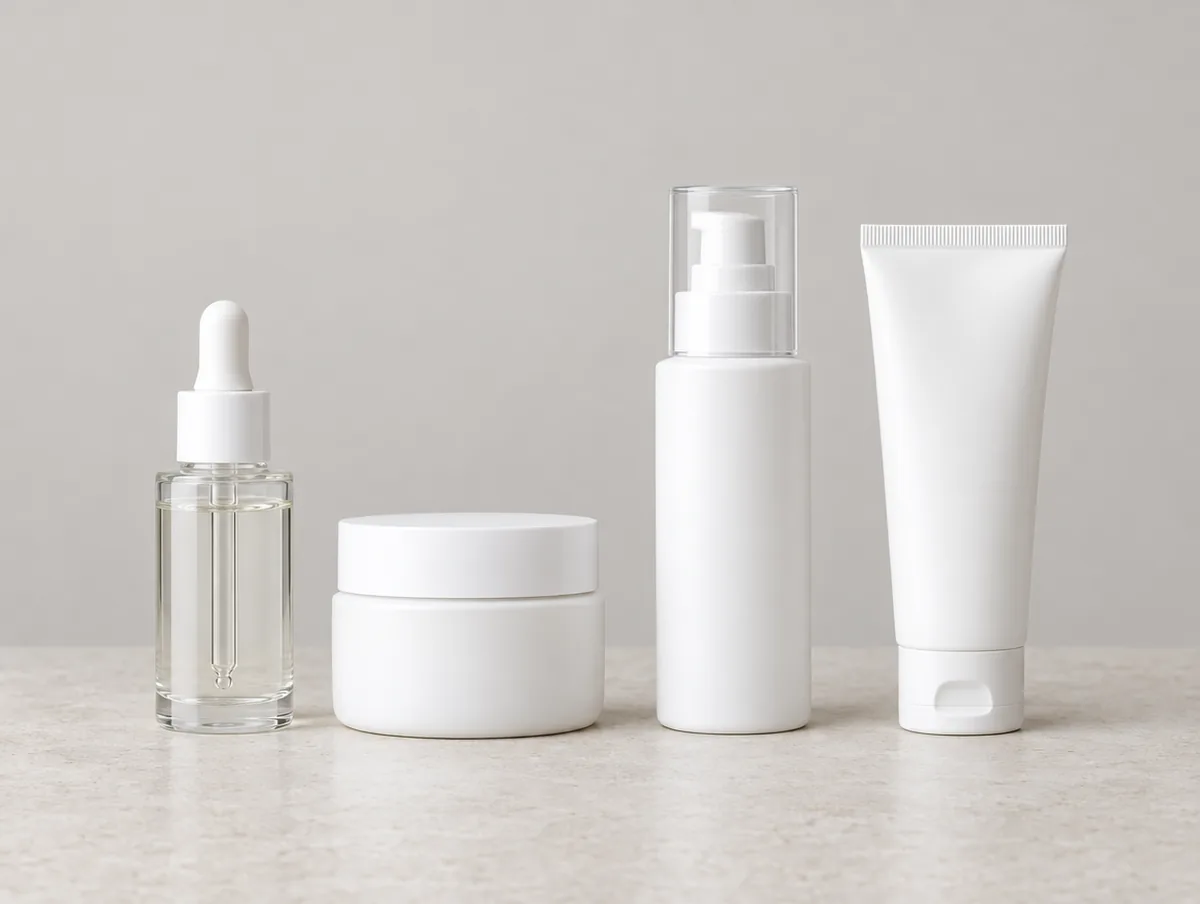
Implementation
Authex scans marketplace listings, web shops, social media stores and ads that use the names of your fragrance, skincare and make-up products or their bottle and box images. Listings that mention your product as a "dupe" or "same scent", stores outside your authorized seller list and giveaway accounts imitating your official profile are classified separately. The regulatory compliance check flags wording in the listing text (product name, description and price) that gives a product effects it does not have; it does not inspect product images or labels. Removed listings are watched for a return with the same images.
Cosmetics has been the most frequently notified product category in the EU's Safety Gate rapid alert system for three years running. The Commission's web crawler looks for listed products sold online and for products that reappear for sale later, and marketplaces must respond to its notices within three working days. Brand owners can face a similar cycle. A removed counterfeit perfume listing can come back later under another store name with the same photos, and catching it requires keeping the record of the first listing.
Request a meeting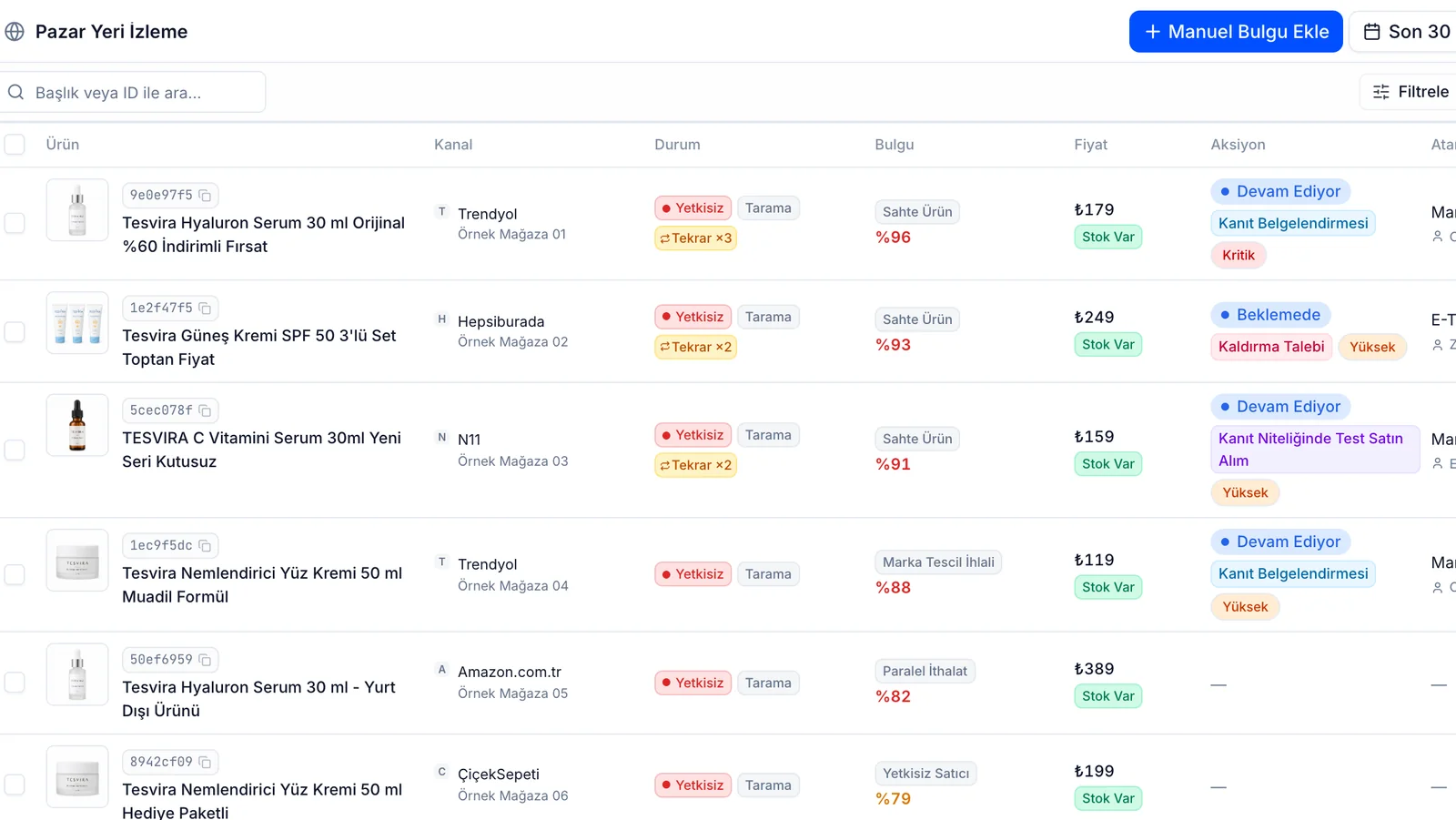
Data
Share of cosmetics among dangerous product alerts validated in the EU Safety Gate system in 2025; the category has topped the list for three years
Source: European Commission, Safety Gate 2025 annual reportURLs inspected in 2025 in all EU official languages by the Safety Gate eSurveillance web crawler looking for dangerous products
Source: European Commission, Safety Gate 2025 annual reportRisks
Sellers may put your product name in the title, show your photo and write "dupe" or "tester" in the description. Marketplace search can then show the listing next to the original.
Accounts with handles close to the brand name can run fake giveaways and ask the supposed winner for a shipping fee or card details.
Products made for foreign markets or diverted from their channel can be sold without Turkish labelling. The consumer complaint can still reach the brand owner in Türkiye.
Listing copy can give the product effects it does not have, such as "treats dark spots" or "stops hair loss". The Turkish Cosmetic Products Regulation bans wording that implies characteristics a product does not have in promotion and advertising too.
Example scenario
Product names, fragrance and line names, pack images, official accounts and authorized sellers are entered.
Marketplaces and social media are scanned by image similarity to your product photos and by text matches on your product names.
Counterfeit, dupe, unauthorized sale, fake account and claim findings are separated and ranked by risk level. Findings can be assigned to the right people in e-commerce and legal.
Your brand or lawyer sends complaints and reports to the platforms, and the results are logged on the finding. If the same photo appears in another store, the old record reopens.
Regulation
Article 23 of the regulation published on 8 May 2023 bans text, names, trademarks and images that imply characteristics a product does not have, in labelling, promotion and advertising. Under Article 16 the responsible person notifies the product to the national electronic database before placing it on the market; online monitoring does not replace this notification.
Under Law No. 6563, the marketplace removes the product on the right holder's complaint backed by information and documents on the intellectual property infringement and informs the seller and the right holder; if the seller submits an objection backed by information and documents showing the opposite, the product is relisted. Articles 12 to 14 of the regulation set the complaint and objection procedure and provided for a 48-hour removal period and a 24-hour relisting period; the execution of these articles was stayed by the 10th Chamber of the Council of State (Danıştay) in May 2023, and as of November 2026 we have found no published information that the stay has been lifted. Platforms may continue to apply these periods in their own procedures; confirm the current position with your lawyer.
This section is for information only; official sources prevail for current obligations.
FAQ
Selling another product by associating it with your brand can fall among the uses Article 7 of the Turkish Industrial Property Law lets a trademark owner stop, and the same article covers unlawful comparative advertising. The assessment depends on the listing. Authex records these listings and prepares the complaint file according to your legal team's decision.
The right holder reports the account to the platform as brand impersonation, with your official account, the fake account's URL and screenshots of the giveaway posts. Authex prepares the file, tracks the outcome and catches new accounts opened with the same images.
A seller can open a new store or account in place of the closed one and reuse the same photos. Authex stores the images and descriptions of removed listings; when a similar listing appears, it is merged with the old finding and a new complaint draft is prepared.
That depends on where and with whose consent the product was first put on the market, and it needs legal assessment. Authex compares these sellers with your authorized seller list and records the listings with a screenshot and source URL. The route to take is set with your legal team.
Other industries
 Luxury goodsDocument counterfeits on resale platforms, fake boutique sites and accounts trading on your brand name.
 Food supplementsTrack counterfeit supplement listings, non-permitted health claims and unauthorized online sellers.
 Textile and apparelFind replica listings, fake outlet sites and unauthorized store names on marketplaces and social media, with the evidence your notices need.
Meeting request
The first meeting reviews your brand, sales channels and the risks you face, and recommends a monitoring scope.
Request a meeting